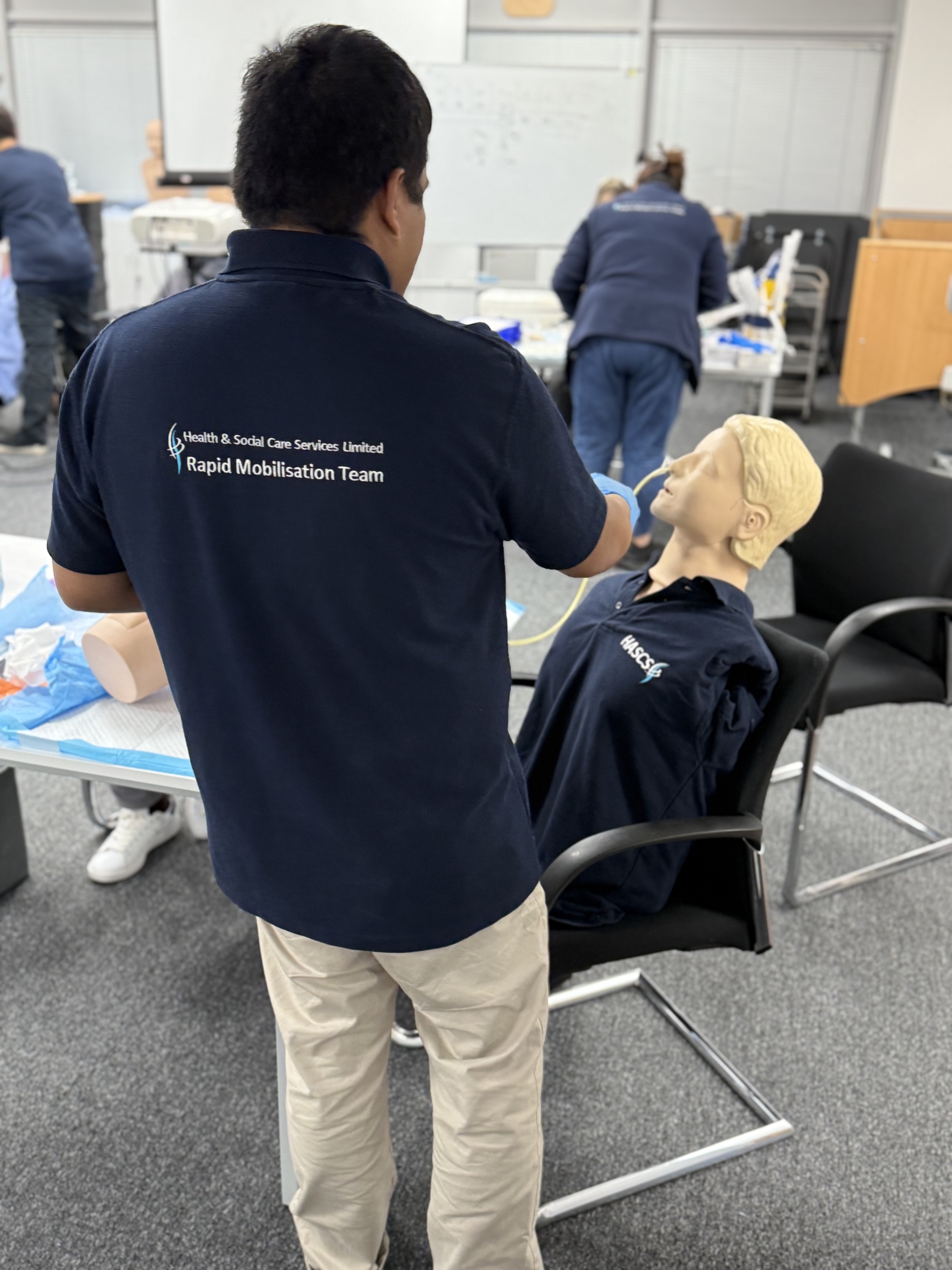


Healthcare training can feel miles away from the real thing, but nurse-led training closes that gap.
When practising nurses teach you, they’re sharing what actually happens in care – how to handle situations that catch you off guard, what works when things don’t go to plan, the small things that make a real difference.
Here’s why learning from nurses who work in care changes training for the better.
How Practical Experience Translates
Nurses who are actively working in care understand precisely the lay of the land and how everything fits together. This spans everything from equipment to techniques and protocols.
This matters especially in complex care training. Techniques improve, approaches evolve, and what worked five years ago might no longer be best practice. The nuance of care is compounded by the fact that no two individuals or families are the same, and working realities can vary considerably day to day.
At HASCS, our trainers are clinicians who work directly in care delivery. They understand the realities you’ll face because they’re managing them themselves.
Real Situations, Not Just Theory
Care is naturally unpredictable and requires a hands-on, problem-solving attitude.
Nurse-led training prepares you for that. Your instructors share experiences they’ve encountered and how they handled them. They’ll tell you what they tried first, what worked, what didn’t, and why. Every ounce of practical knowledge matters when you come to face your own challenges.
Training courses for nursing should have a practical focus. That way, you learn to notice important patterns because your instructor has seen them before and can transfer the knowledge onto you.
Building Confidence From Practice
Confidence in care jobs comes from practice. After generic training, you might still feel underprepared. Nurse-led training fills those gaps. Here’s why:
● Clinical Skills: Learning from someone who uses these techniques daily and can troubleshoot when the situation doesn’t pan out as expected.
● Communication: Understanding how to talk with families, clients and colleagues based on actual experience.
● Problem-Solving: Developing judgement to assess situations quickly and make sound decisions under pressure.
● Professional Boundaries: Knowing where to draw lines, when to escalate, and how to maintain appropriate relationships.
These skills develop through teaching rooted in experience, which is key to building confidence in your day-to-day working life. This also makes the job far more rewarding more quickly, as you may feel you can move forward without doubt or trepidation.
When it comes to complex care specifically, when you train with us at HASCS, our instructors teach from experience managing ventilators, administering complex medications, handling challenging situations, and coordinating between different healthcare providers.
They understand where new carers typically struggle, so that they can brief you in advance.
Choosing Where to Train
If you’re looking at complex care training or nursing jobs, ask who’s teaching. Are they working clinicians or people removed from current care? Do they understand today’s challenges?
Ultimately, the quality of your training fundamentally affects your confidence and competence. Learning from nurses still doing the job means your training reflects the situations you’ll face every day in the field.
Interested in training that properly prepares you? Contact our friendly team. We’d love to talk about our training programmes and opportunities in complex care.