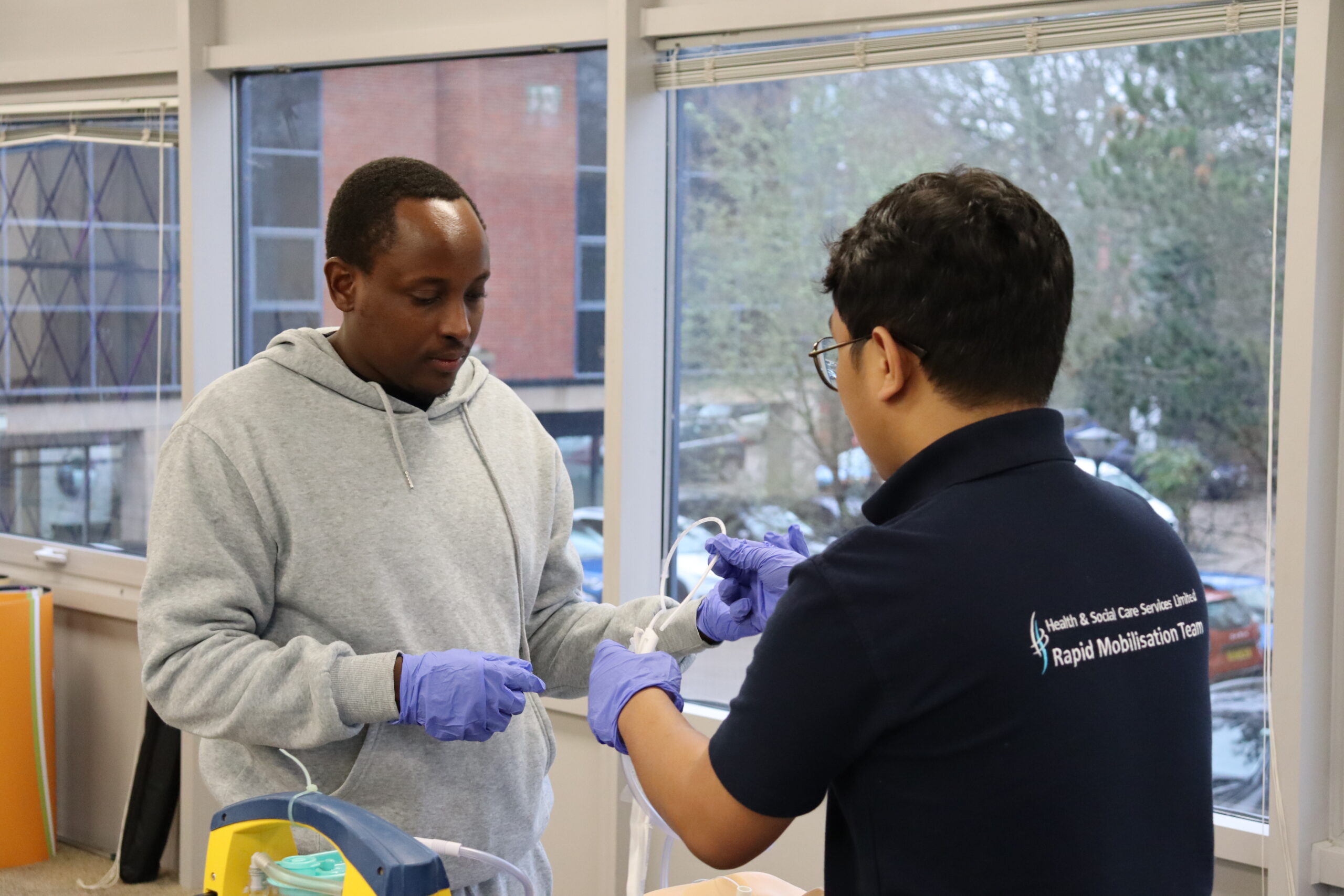


Healthcare training can feel far removed from the real thing, but nurse-led training bridges that gap.
When practising nurses teach you, they’re sharing practical knowledge of what truly happens in care – how to handle situations that catch you off guard, what works when things don’t go to plan, and the small details that make a tangible difference.
The result? Care training that’s so much better for everyone than merely ticking compliance boxes. Less stress on the job, more confidence, and enhanced care.
Here’s why learning from nurses who work in care changes training for the better.
Beyond Tick-Box Compliance
Mandatory training exists for good reasons. Care workers need proper preparation in safeguarding, infection control, medication management, and health and safety. These requirements protect both carers and the people they support.
The problem is how it’s often delivered. For instance, generic online modules are too often designed to cover everything at once. Watch the video, answer the questions, and download your certificate.
You’ve met the compliance requirement, but do you feel prepared to do the job? Often not the case.
In complex care, where you’re managing ventilators, administering medications through feeding tubes, or supporting someone with multiple health conditions, tick-box training isn’t enough.
You need to understand not just what to do, but why you’re doing it and what to watch for when things don’t go exactly to plan.
How Practical Experience Translates
Nurses who are actively working in care understand precisely how everything fits together, from equipment to techniques and protocols.
This matters especially for complex care training. Techniques improve over time, methods evolve, and what worked well a few years ago may no longer be best practice.
The nuance of care is compounded by the fact that no two individuals or families are the same, and working scenarios can vary considerably day to day.
At HASCS, our trainers are clinicians who work directly in care delivery. They understand the situations you’ll face because they’re directly managing them themselves.
Real Situations, Not Just Theory
Care is naturally unpredictable and requires a hands-on, problem-solving attitude.
Nurse-led training prepares you for that. Your instructors share experiences they’ve encountered and how they handled them.
Every ounce of practical knowledge matters when you face challenges in the field. Training courses in nursing at HASCS are practical-focused for this reason.
Building Confidence From Practice
Confidence blooms from practice. Even after generic training, you may still feel underprepared. Nurse-led training fills those gaps:
- Clinical Skills: Learning from someone who uses these techniques daily and can troubleshoot when the situation doesn’t pan out as expected
- Communication: Understanding how to talk with families, clients, and colleagues based on experience
- Problem-Solving: Developing judgement to assess situations quickly and make sound decisions under pressure
- Professional Boundaries: Knowing where to draw lines, when to escalate, and how to maintain appropriate relationships
These skills develop through teaching rooted in experience, which is key to building confidence in your day-to-day working life. This also makes the job far more rewarding more quickly, as you may feel you can move forward without doubt or trepidation.
Choosing Where to Train
If you’re looking at complex care training or nursing jobs, ask who’s teaching. Are they working clinicians or people removed from current care? Do they understand today’s challenges?
Ultimately, the quality of your training affects your confidence and competence. Learning from nurses still doing the job means your training reflects the situations you’ll face every day in the field.
Interested in training that prepares you effectively? Contact our friendly team. We’d love to talk about our training programmes and opportunities in complex care.